
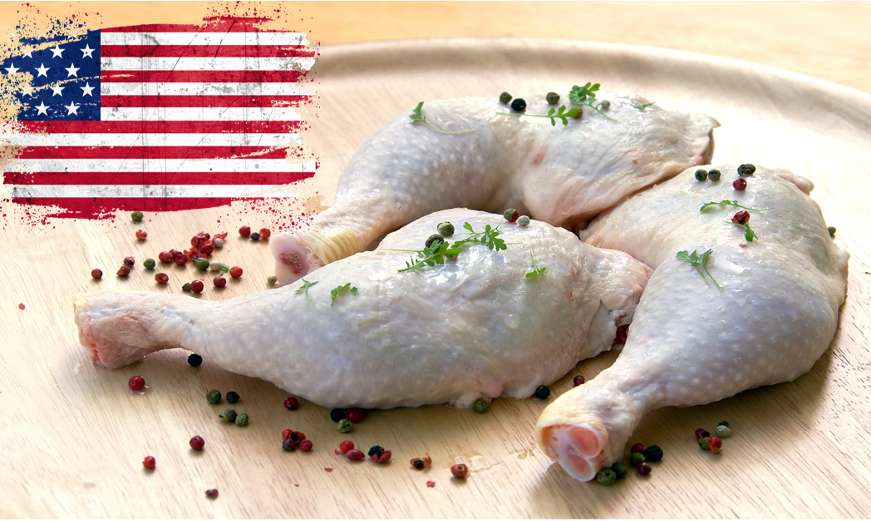
Historically, chicken has been cheaper than other animal proteins such as beef and pork. Although inflation since 2021 has driven prices of popular chicken cuts like boneless skinless breast meat, tenderloins, and wings above $3.00 per pound at times, bone-in dark meat continues to offer a relative value advantage.
Leg quarters were severely impacted after the collapse of U.S. poultry exports in 2015, following trade disruptions with Russia and avian influenza outbreaks. That year, wholesale leg quarter prices averaged just $0.26 per pound, down 45% from the 2011–2014 average. Prices remained weak for several years, dropping again to $0.27 per pound in 2020.
Since then, leg quarter prices have increased every year, reaching an average of over $0.52 per pound in 2025 — a 93% increase over five years and a nominal record high. Despite this rise, leg quarters remain affordable compared to other proteins. Over the past three years, their price has averaged about 15% of the wholesale choice of beef cutout value, consistent with long-term trends. Compared to pork, leg quarters have averaged just over 50% of wholesale pork cutout values, still within historical norms.
While protein prices overall have risen, bone-in chicken with dark meat continues to provide consumers with one of the most budget-friendly options available.
.png)