
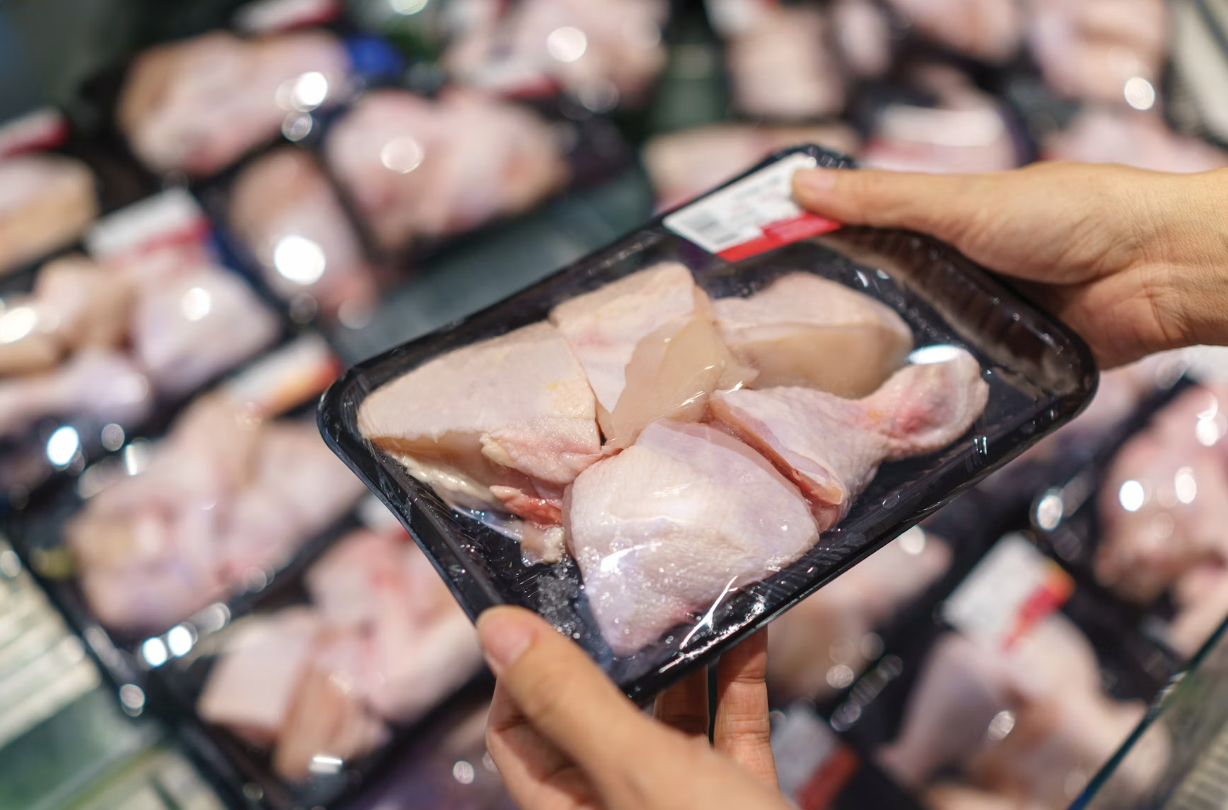
Growth estimates made earlier this year appear to have erred on the side of caution as global industry enjoys a largely positive first half, despite headwinds.
Global poultry production is forecast to expand by around 3-3.5% this year. The prediction, made by Rabobank in late June, is higher than its forecasts made earlier this year and slightly above those made by the USDA’s Foreign Agricultural Service (FAS) in April which expected global production this year to rise by about 3% reaching 110.7 million metric tons (MT). Demand for poultry meat continues to rise around the world, and while the year has been marked by geopolitical disruptions, the poultry industry has largely taken them in its stride. Further benefiting the industry is that domestic outbreaks of Highly Pathogenic Avian Influenza (HPAI) have trended downward.
FAS forecast that all major poultry producers would expand, and that strongest growth would be in China, Brazil, the U.S. and the EU. Rabobank has subsequently added South Africa and the Philippines to the list of countries where growth will be particularly strong. The industry is benefitting from a favorable price position, particularly relative to beef, which supports the ongoing consumer shift toward chicken consumption. However, Rabobank cautions that weaker economic conditions, and increasingly price-sensitive consumers, may start to weigh on demand for chicken, particularly in lower-income markets, as the year progresses.
In June, the Food and Agriculture Organization (FAO) forecast that global poultry trade would increase by 3.1% to 17.1 million MT. Rabobank notes that trade remains strong - with a 3.5% increase recorded during Q1, an historic high - but cautions that there could be significant disruptions should Brazil’s removal from the EU’s list of approved countries not be revoked. Should this be the case, it would likely reshape trade flows, pushing EU prices higher and Brazilian prices lower, and resulting in the EU importing more from other suppliers, such as China or Thailand. China’s growing presence in export markets is another factor to note.
While general inflation fears may be moderating, the FAO notes that the Iran conflict has pushed energy prices higher and restricted fertilizer availability, and that these impacts will weigh on margins. The risk of higher inflation and rising interest rates may have receded, butremain on the horizon.
US
While the USDA FAS initially forecast a 2% expansion in U.S. broiler production, revisions in June were significantly higher at 2.9%. The USDA now believes that production will reach 2.40 million MT. Production during the first quarter was 3.7% higher and continued strongly into the second. Both increased chick placements and heavier slaughter weights are contributing to U.S. expansion. Margins have been positive and domestic demand firm, however, Rabobank notes that while demand remains strong, returns during the second quarter were disappointing. It adds that the industry is not likely to slow production before the last quarter, limiting price and margin recovery. It continues that prices are trailing historical norms, however, feed and fuel prices remain manageable.
The USDA’s forecasts suggest that exports will stand at a little over 3 million MT, a 0.8% contraction on 2025. The figure is an improvement on April’s forecasts, however, when FAS argued that exports would decline by 3%, challenged by weak price competitiveness in global markets, limited offerings for Mexico against stiff competition from Brazil and lower demand from Cuba. Lingering HPAI-related restrictions in China and South Africa were also expected to be detrimental, although as the year has progressed there has been some relief. The U.S.’s imports are forecast to be 11.2% lower this year.
China
China, which the FAO reports now accounts for nearly one-fifth of global poultry meat production, is expected to see output rise by 5% this year, according to its April forecasts. Rabobank notes that over the first quarter of 2026, production expanded by 9.4%, leading to oversupply and would remain high to year end. The expansion is being supported by high grandparent stock inventories, and the continued growth of large integrated producers, with enough slaughter and processing facilities to respond to demand. Domestic consumption is slowly growing, although prices were weak over the opening months of the year. To a degree, lower feed costs offset lower prices over the opening months of the year. By June, however, prices were higher. Rabobank notes that feed prices were higher during Q2 but will likely soften in H2 due to sufficient feed grain supply and weakening demand from the swine sector.
While China’s home market may be showing only limited signs of growth, the country’s exports are expected to be significantly higher this year, continuing the trend of the past couple years. China moved from being a net importer to a net exporter in 2024. Imports as a percentage of consumption ranged from 2-5%, while exports, which ranged from 3-5% of production, reached 8%. To date this year, exports have surged. China is expected to overtake Thailand as an exporter this year, with key markets being Japan, Hong Kong, Russia and the EU.
Brazil
With an economy that has performed more strongly than expected, Brazil’s poultry producers have been benefitting from stronger domestic consumption and strong export demand. While FAS’s April forecast saw Brazilian production expanding by 2% this year, reaching 15.8 million MT, local forecasts made in May by industry body the Brazilian Association of Animal Protein (ABPA) saw 2026’s output rising a little less to 15.6 million MT. Live broiler prices resumed an upward trend in May, following three consecutive months of declines. Chick placements have been lowered to address over supply.
While the industry is benefitting from lower production costs this year, for the first five months of the year it also had to deal with a strengthening currency, although this has now given up some of its gains. Despite its product becoming more expensive in overseas markets, in June, ABPA revealed its highest export figure ever for the month of May, despite, it said, difficulties in the Middle East. The country shipped 509,000 MT, worth US$1 billion. For the first five months of the year, exports were 8.7% higher by volume and 11.3% higher by value. The association believes that total poultry meat exports could reach 5.5 million MT by year end.
Asia has regained its importance as an export destination; however the Middle East and Europe remain a cause for the industry. In the case of the latter, efforts to have Brazil reinstated as an approved third country for animal protein, could see significant changes for the industry come September.
EU
Local forecasts for the European poultry industry have been slightly more subdued than those made by FAS, with the European Commission pointing to a 1.4% expansion this year, slightly below FAS’s 1.5%. Over the first half of this year, Europe’s broiler producers enjoyed strong demand and higher prices, along with input costs that were down from the peaks of recent years. Outbreaks of HPAI between February and June were similar this year to last year, reports the European Food Safety Authority (EFSA), but are trending downwards from late 2025 and this decline is expected to continue over coming months.
The first quarter notched up a solid expansion of 5.7% in broiler production, the Commission notes, and over the first four months of the year, chick placements were also higher. Rabobank notes that, over the first six months of the year, chick placements were 6% higher.However, the bank notes that the EU’s ongoing expansion is too strong to keep up with increases in consumption, and over the first half prices were impacted, although there has been some recovery. Margins have been positive but they are pressured. The commission notes that in the first two months of this year, the volume of exports fell by 6.7%, while imports were 5% higher.
Thailand
Rabobank notes that strong processed meat exports are keeping industry performance above breakeven, but that Thailand’s weaker economy has resulted in softer demand at home. The subdued economy, along with less tourism, are pressuring consumer spending. Alongside this weaker demand, broiler prices were 5% lower in May when compared to May 2025, and, indeed, lower than at the start of the year. Producers are also having to work with higher energy and feed costs, and with higher prices for hatching eggs.
Expansion will be lower this year than last and driven by exports. Thai exports may receive an additional boost should Brazil not regain access to European markets. In late 2025, the Kasikorn Research Center, part of commercial bank Kasikornbank, noted that it expected chicken production to reach 3.47 million MT in 2026, an increase of 0.9%, but below the 1.3 expansion recorded in 2025. It continued that exports were expected to reach US$4.665 billion, a 3% increase, but again weaker than the expansion witnessed in 2025.
In its home market, Kasikorn noted that demand would be stagnant and prices stable. It forecast lower feed prices but higher costs for other inputs. Of help to the Thai industry will be a new zero-tariff framework allowing up to 1 million tons of U.S. corn to be imported, with a Memorandum of Understanding signed in May.
.png)