
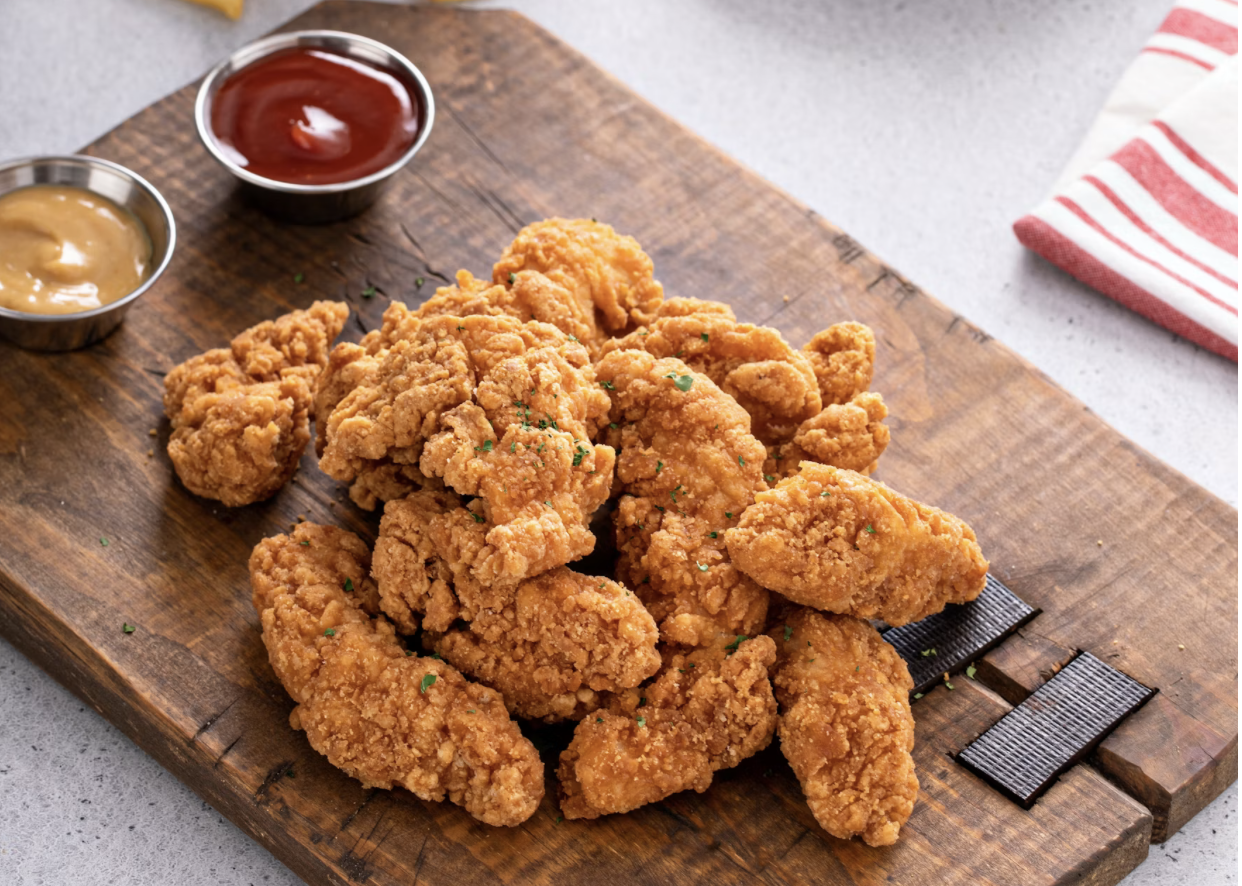
Tenderloins and whole wings bear the brunt of the broiler industry’s current price slump.
Over the past five calendar years (2021-25), wholesale spot prices for chicken tenders averaged $2.14 per pound according to the U.S. Department of Agriculture’s Agricultural Marketing Service. Whole wing prices averaged $1.85 per pound during that same span. The two items ranked first and second out of a group of 10 boneless and bone-in whole muscle cuts reported on a regular basis by the agency.
Of course, it’s misleading to rank tenders ahead of wings in this context because it isn’t an apples-to-apples comparison. Converting wings to a boneless equivalent implies a higher average price per edible pound than tenders over the past five years. Regardless of price discrepancies related to inedible material, both markets have tracked much closer with the rest of the pack so far in 2026.
Impact of soft foodservice demand
Tenders and wings are underperforming the rest of the chicken category by a wide margin when comparing current-year prices to the most recent five-year average. It probably isn’t a coincidence that these two cuts have much higher exposure to the foodservice industry than the rest of the bird, with both acting as centerpiece offerings for numerous chicken-themed establishments in the fast-casual space. Anecdotal reports of a slump gripping the foodservice industry have been supplanted by data confirming the narrative.
The U.S. Census Bureau reported that inflation-adjusted sales across the foodservice industry were down about 1% from last year this spring (Mar-May). Soaring fuel prices, with the national average price for a gallon of regular gas increasing from less than $3 back in January and February to either side of $4 in recent months, as a consequence of the U.S.-Iran conflict have likely exacerbated the slump, which appears poised to extend through summer, at least. The wing market has perked up recently, but spot prices are just now getting back above the $1 mark on a consistent basis for the first time since February. Both tenders and wings are on track to post their lowest annual average since 2011 overall this year.
Supply glut also matters
Aggressive and persistent expansion across the U.S. broiler sector has also had a hand in softening the tender and wing markets from their prevailing trading ranges in recent years. Ready-to-cook (RTC) broiler production in the U.S. is on pace to increase between 3% and 4% this year compared to 2025. Annual production increases exceeding 3% have been few and far between over the past quarter of a century, and there hasn’t been an annual increase exceeding 4% since 2004.
This is certainly relevant, but with several product channels, primarily from the back half of the bird, on track to post a higher average price this year compared to their average from the past five years, demand-side malaise and current trends in the restaurant space are of greater consequence right now, it seems. While it feels like this talking point is recycled whenever chicken cuts individually or collectively stumble like they have recently, the silver lining for broiler industry stakeholders is that their competitive position against rival animal protein categories has further strengthened.
.png)